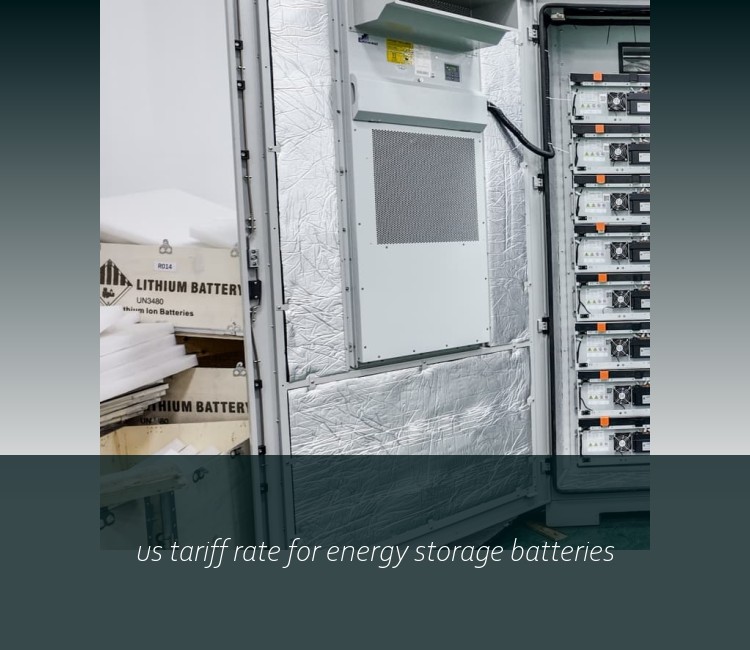
How will the new US import tariffs affect battery energy storage?
The new US import tariffs, including a 10% baseline on all goods and higher rates for key trading partners, such as China, Malaysia, and Vietnam, are expected to have a significant impact on the US battery energy storage industry.
How will tariff chaos affect the stationary battery energy storage industry?
Tariff chaos reigns supreme in the development of the US stationary battery energy storage industry. Facing extraordinary tariffs of 145% on BESS imports into the country, developers will have to rely on inventory to realize projects. When these stockpiles are exhausted the outlook is unclear. Even the 145% tariff rate is uncertain.
What are China's battery tariffs?
Recent trade actions have introduced significant battery tariffs on goods imported from China. These changes include duties as high as 104% on some clean energy components, including lithium-ion batteries, critical for energy storage and EV systems. According to U.S. import data, lithium battery shipments from China reached $1.9 billion in .
How will the Section 301 tariffs affect battery energy storage?
On May 14, , U.S. President Biden and U.S. Trade Representative Katherine Tai announced changes to the Section 301 tariffs on Chinese products. The tariffs affect a range of clean energy imports including EVs, solar PV, battery energy storage, and inputs for these. This briefing focuses on the tariffs affecting battery energy storage.
How are battery tariffs reshaping global trade?
As new battery tariffs and expanded China tariffs continue to reshape global trade, U.S. policymakers and businesses are reevaluating the domestic battery supply chain. This section outlines the current status of U.S. battery production, the resources required to scale it, and the challenges involved in reducing reliance on overseas suppliers.
Why are battery tariffs increasing?
Recent trade adjustments have introduced significant increases in battery tariffs, ranging from 54% to 104%, depending on product type and classification. These duties now apply to a broad range of products, including: These costs for utility-scale energy storage systems directly affect capital expenses and deployment schedules.
Impacts of Trump Administration Tariffs on the
Proposed tariff increases on Chinese lithium-iron-phosphate (LFP) battery imports threaten to disrupt the United States’ deployment of battery energy storage systems (BESS), a critical enabler
Tariff uncertainty grips US battery development
Tariff chaos reigns supreme in the development of the US stationary battery energy storage industry. Facing extraordinary tariffs of 145% on BESS imports into the country,
Tariffs reshape project economics for U.S. energy
Tariffs remain at the center of the discussion about what’s next for the U.S. energy storage market as they continue to reshape project economics, according to the Q1 reports on energy storage supply,
Battery Tariffs : Impact on U.S. Energy and Trade
Explore how battery tariffs affect U.S. imports, energy storage, EV production, and sourcing strategies amid rising China tariffs and trade shifts.
Tariffs ‘could trigger 50% hike in US energy storage costs’, report
Recent tariff policies are set to increase the cost of power generation technologies, with energy storage seeing the biggest hike due to its dependence on Chinese
Addressing Tariffs and Trade in Energy Storage
There have also been indications that the US administration may consider other tariff proposals impacting energy storage, such as a 10–20% universal tariff, tariffs of up to 60% across the board on Chinese
CEA Update on U.S. Battery Policy Developments
This briefing focuses on the tariffs affecting battery energy storage. Policy changes affecting the solar portion of the Section 301 tariffs are addressed in a separate briefing.
What Trump’s tariffs mean for US battery storage
Analysts see negative impacts across the board, but EV and battery energy storage industries seem particularly vulnerable to US President Donald Trump’s sweeping tariffs.
CEA Update on U.S. Battery Policy Developments
Details: On May 14, , U.S. President Biden and U.S. Trade Representative Katherine Tai announced changes to the Section 301 tariffs on Chinese products. The tariffs affect a range of
Trump tariffs, orders rein in thriving battery storage
Tariffs and funding overhauls by the Trump administration are set to raise energy storage prices and hit short term deployment as domestic manufacturing capacity falls short.
Expert discusses how tariffs on Chinese batteries are reshaping U.S
Investing.com -- Soaring tariffs on Chinese battery imports are driving up costs and reshaping supply chains across the U.S. grid-scale energy storage sector, according to
Expert Deep Dive: Impact of New U.S. Tariffs on
This article explores the impact of new U.S. section 301 tariff changes on the energy storage industry and strategies for thriving in this evolving environment.
US Lithium-Ion Tariffs: Bulk Procurement
In , US lithium-ion battery buyers face an unprecedented challenge: a sweeping 145% tariff on cells imported from China. As solar installers, EV manufacturers, and data-center operators
Trump's 1930s-era tariffs bring China battery tariff
These are effective immediately and, combined with existing and incoming tariffs, mean that from 1 January , batteries and battery energy storage systems (BESS) from China will be subject to a total tariff
What Trump’s tariffs mean for US battery storage
Analysts see negative impacts across the board, but EV and battery energy storage industries seem particularly vulnerable to US President Donald Trump’s sweeping tariffs.
US battery market faces possible ‘significant tariff
US battery market faces possible ‘significant tariff impacts’: Clean Energy Associates With limited production capacity outside China, CEA’s Q4 report sees heavily tariffed Chinese
US and China pause tariffs, effective duty on BESS falls to c.60%
That means an effective tariff on battery energy storage systems (BESS) or batteries for BESS of 40.9% right now and 58.4% from 1 January , Energy-Storage.news
ACP Statement on 301 Tariffs for Battery Storage
WASHINGTON DC, May 14, —The American Clean Power Association (ACP) released the following statement today from ACP CEO Jason Grumet after the Biden Administration’s decision on Section 301 tariffs related to
Tariff Threats: Energy Storage Prices Could Rise 35% or More
If steeper tariffs are enacted on the global battery energy storage supply chain under the Trump Administration, the near-term impact could raise U.S. costs on battery
China’s lithium-ion battery exports: Why are US prices so low?
Export prices for Chinese batteries entering the US are lower than for any other market, suggesting that China may be engaging in anti-competitive behavior. As batteries grow
How Trump’s Tariffs Could Hobble a U.S. Battery
Utility-scale battery capacity in the United States Battery storage rose by 66 percent in compared with the year before.
Tariff Threats: Energy Storage Prices Could Rise
If steeper tariffs are enacted on the global battery energy storage supply chain under the Trump Administration, the near-term impact could raise U.S. costs on battery technology by 35% or more, according to
Tariff Section 301
Tariff Section 301 - What U.S. Companies Need To Know The article examines the impact of U.S. Section 301 laws on the battery industry, focusing on Lithium-Iron Phosphate (LFP) and Nickel
China’s lithium-ion battery exports: Why are US
Export prices for Chinese batteries entering the US are lower than for any other market, suggesting that China may be engaging in anti-competitive behavior. As batteries grow in importance for commercial
Solar, energy storage industries after Biden’s Section 301 tariff
Tariff rates will double from 25% to 50% for solar cells and modules after and rise from 7.5% to 25% for lithium-ion non-EV batteries (most energy-storage batteries) in
Battery energy storage tariffs tripled; domestic
Tariffs tripled On May 14, , the Biden Administration announced changes to section 301 tariffs on Chinese products. For energy storage, Chinese lithium-ion batteries for non-EV applications from 7.5%
Tariffs spell harm to US energy storage industry
A report by consultant Wood Mackenzie examines two possible tariff scenarios and concludes costs will skyrocket for battery energy storage systems (BESS) and utility-scale solar.
How Will Steep EV Battery Tariffs Reshape U.S. Automakers and
The U.S. government’s recent escalation of EV battery tariffs on Chinese imports—raising Section 301 duties from 7.5 percent to 25 percent by plus a 10 percent
The trade war beginsWhat does this mean for EVs, batteries
In , over 90% of lithium-ion energy storage cells deployed in the US storage market originated from China, according to Rho Motion’s BESS database. Under the new
Potential US-China battery trade war escalates
Tariffs and ULFPA Batteries from China are soon going to be subject to a tariff of around 28.4%, mainly comprised of an increased 25% Section 301 tariff which came into force on 1 January, for electric
ESS Price Forecasting Report (Q1
This Interim Update of the Energy Storage System (ESS) Q1 Price Forecasting Report highlights how newly imposed U.S. tariffs are reshaping the cost landscape
Current Tariff Landscape for LiFePO4 Battery Imports from China
Current Tariff Landscape for Lithium-ion LiFePO4 Battery Imports from China to USA is a complex mix of tariffs. As of April , total tariffs range from about 70% to over
Discussion & Message Board
Comments saved locally (demo). Replace with server endpoint for production.